Cart
0

The woods are full of stories. The trick is learning how to read them.
A patch of disturbed leaves. A set of tracks crossing a muddy trail. A broken twig hanging from a low branch. To an untrained eye, these details might seem insignificant. But to someone who knows what to look for, they can reveal an incredible amount about the wildlife living nearby.
The forest is rarely as quiet as it seems. Deer move through thick cover before sunrise. Squirrels gather food for the colder months. Turkeys scratch through leaves in search of their next meal. Foxes follow familiar routes, birds leave feathers behind, and countless smaller animals travel through the undergrowth largely unnoticed.
Even when the animals themselves remain hidden, evidence of their presence is often all around us.
Learning to recognize wildlife signs in the woods adds a new dimension to almost any outdoor adventure. Hunters can use these observations to better understand deer movement and habitat. Hikers can turn an ordinary walk into a wildlife discovery. Campers can learn more about the ecosystem surrounding their campsite, while photographers and families can develop a deeper appreciation for the natural world.
You do not need expensive equipment or years of experience to get started. You simply need patience, curiosity, and a willingness to slow down.
In this guide, we'll explore how to identify animal tracks, droppings, feeding areas, deer rubs, scrapes, trails, feathers, and other clues that help tell the story of the woods.
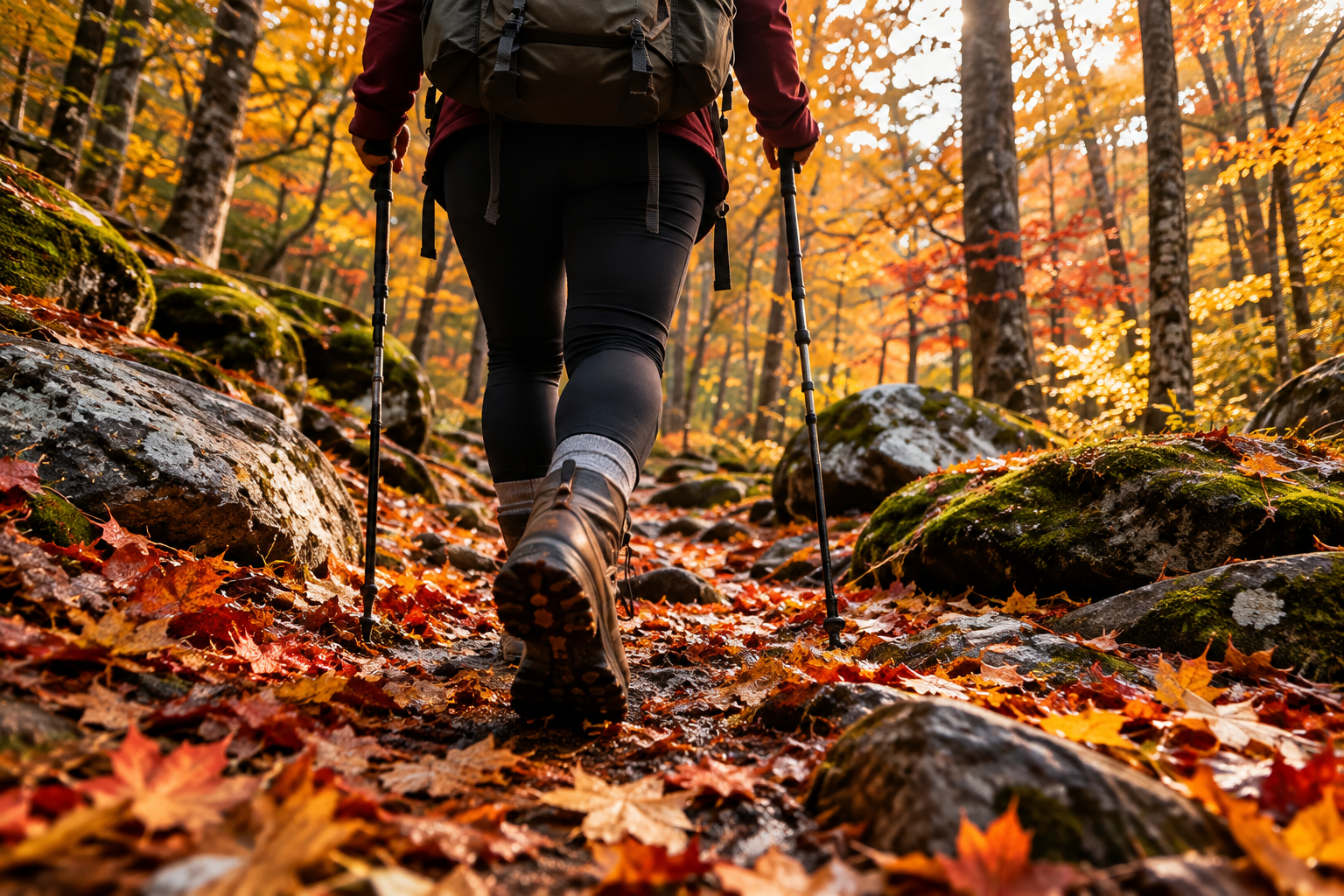
So lace up your boots, pay attention to the details, and get ready to see the outdoors a little differently.
Why Learning to Read the Woods Matters
Spending time outdoors is about more than reaching a destination. Sometimes, the most rewarding part of a hike, hunt, or camping trip is noticing something you would have walked right past a year ago.
Learning to read wildlife signs helps you become more observant and connected to your surroundings.
It reveals which animals live nearby
You might spend an entire morning in the woods without seeing a deer, turkey, fox, or rabbit. That does not mean the area is empty. Tracks, droppings, feeding marks, feathers, and trails can all indicate which animals have recently used the habitat.
Over time, you may begin to recognize which areas support different species and how wildlife uses the landscape.
It teaches you to recognize patterns
A single track is interesting. A series of tracks, a nearby feeding area, and a well-used trail can tell a much more useful story.
As you gain experience, you will start connecting different clues rather than interpreting each one by itself. You may notice that animals repeatedly use the same narrow passage, feed beneath particular trees, or leave cover at certain times of day.
These patterns are not guarantees of future animal activity, but they can help you develop a better understanding of local wildlife.
It makes familiar places feel new
A trail you have walked dozens of times can become an entirely different experience when you start noticing the details.
You might discover a line of deer tracks crossing a drainage, squirrel feeding remains beneath an oak, or turkey scratch marks along a woodland edge.
The landscape has not changed. Your ability to see it has.
It encourages responsible outdoor recreation
Observing wildlife also teaches respect for the animals that share our outdoor spaces. Recognizing signs without disturbing nests, dens, bedding areas, or other sensitive locations helps protect wildlife while allowing people to enjoy the outdoors.
The goal is not to chase every clue until an animal appears. Sometimes, the best decision is to observe from a distance and let the woods carry on undisturbed.
1. Animal Tracks: Learning to Recognize Footprints
Animal tracks are among the most recognizable signs of wildlife, and soft ground can preserve an impressive amount of detail.
Look for tracks in damp soil, mud, sandy streambanks, patches of snow, and other places where an animal's foot can leave an impression.
When you find a track, resist the urge to identify it immediately. Start by observing its shape, size, depth, and arrangement.
What to look for in a track
Pay attention to several details:
-
Shape: Is the impression rounded, elongated, divided into two parts, or marked by distinct toes?
-
Size: How large is the print? Remember that young animals leave smaller tracks, and individuals of the same species can vary considerably.
-
Depth: Is the impression shallow or deep? Soil moisture, ground softness, and the animal's weight can all affect depth.
-
Stride and spacing: Are the tracks close together or widely spaced? Do they form a straight line, a wandering path, or a series of paired impressions?
-
Surrounding evidence: Are there droppings, feeding marks, disturbed leaves, or other signs nearby?
The pattern of several tracks is often more informative than one isolated footprint.
Common animal tracks you may encounter
White-tailed deer: Deer tracks usually feature two pointed halves, or toes, that create a cloven-hoof impression. The print can look narrow and pointed at the front, although its appearance changes with the ground and the animal's movement.
Wild turkey: Turkey tracks generally show three long toes pointing forward, with a shorter rear toe sometimes visible. Larger birds may leave relatively substantial prints, especially in soft ground.
Raccoon: Raccoon tracks often resemble small handprints, with five toes on each foot. The front and hind feet differ in shape, and the toes may be difficult to distinguish in poor conditions.
Rabbit: Rabbits commonly leave groups of tracks in which the larger hind feet land ahead of the smaller front feet. The exact pattern depends on how the rabbit was moving.
Fox and other canids: Fox tracks generally have four toes and a central pad. They may look similar to tracks left by domestic dogs and other canids, so size, shape, track patterns, and location should all be considered.
Squirrel: Squirrel tracks often appear as small groups of impressions, with the larger hind feet landing ahead of the front feet as the animal bounds.
These are useful starting points, not foolproof identification rules. Rain, wind, overlapping tracks, and the condition of the ground can distort footprints. When in doubt, record what you observe instead of forcing a definite identification.
A simple tip for beginners
Carry a small field notebook or take photographs of tracks beside a ruler or another object of known size. Record where you found them and what the surrounding ground looked like.
Comparing those observations with a reliable regional field guide can help you improve your identification skills over time.
2. Deer Rubs: What Bark and Broken Branches Can Tell You
For anyone interested in whitetail deer, rubs are some of the most recognizable signs to look for during the fall.
A deer rub occurs when a buck rubs its antlers against a tree or woody stem. This behavior can remove bark, expose lighter wood, and leave scraped or polished areas on the trunk.
Rubs may be found on saplings, small trees, and other woody vegetation along woodland edges, travel routes, and areas used by deer.
How to recognize a deer rub
Look for a section of bark that has been visibly scraped or shredded, often with marks running vertically along the trunk. Freshly exposed wood may appear lighter than the surrounding bark, although weather and age can change its appearance.
Some rubs are small and subtle. Others can be surprisingly noticeable, especially on young trees with thin bark.
What does a rub tell you?
A rub indicates that a deer interacted with that tree at some point. Depending on the condition of the rub and the surrounding habitat, it may provide clues about deer activity in the area.
However, a rub does not reveal everything about the animal that made it.
A large rub is not a reliable measurement of a buck's antler size, and a rub does not guarantee that a deer will return to the exact location. Wind, rain, other animals, and the passage of time can also make it difficult to determine how recently the sign was made.
Look at the broader picture. Are there deer tracks nearby? Does the area contain suitable cover, food, and water? Are several rubs scattered along a natural travel corridor?
The more clues you find, the better you can understand how deer may be using the habitat.
3. Deer Scrapes: Recognizing Signs on the Forest Floor
Another important whitetail sign is the scrape.
A deer scrape is an area where a deer has disturbed the ground, often removing leaves and exposing soil. Scrapes are commonly associated with deer communication and breeding-season behavior.
They may appear beneath overhanging branches that deer can reach and interact with, sometimes leaving visible disturbance on the vegetation above the scraped ground.
How to identify a scrape
Look for a patch of bare or disturbed soil surrounded by leaves and forest debris. The area may be roughly circular or irregular, and nearby vegetation may show signs of rubbing or disturbance.
Not every patch of bare soil is a deer scrape. A turkey scratching through leaves, a small mammal digging, or water washing away debris can create similar-looking ground disturbance.
Look for supporting evidence before making an identification.
What scrapes reveal about deer behavior
Scrapes can be associated with communication among deer, particularly during the fall breeding season. Deer may revisit or investigate these locations, but activity varies by location, time of year, individual animal, and local conditions.
A scrape is best understood as one piece of information about deer behavior, not a promise that a deer will appear nearby.
For hunters, these signs can help build a broader picture of the landscape. For hikers and wildlife enthusiasts, they offer a fascinating glimpse into how animals communicate without leaving a spoken word behind.
4. Feeding Signs: Discovering What Animals Eat
Animals leave plenty of evidence while searching for food. Once you learn to recognize these signs, you can often discover which species are using an area even when tracks are difficult to find.
Feeding signs may include chewed vegetation, disturbed leaf litter, nuts and seeds with damaged shells, stripped bark, uprooted plants, and the remains of fruits or berries.
Acorns, nuts, and seed remains
Oak trees are especially interesting places to investigate in autumn. Acorns provide food for deer, squirrels, turkeys, and numerous other wildlife species.
Look beneath trees for acorn caps, broken shells, partially eaten nuts, and disturbed leaves. Squirrels often leave characteristic feeding remains where they have opened nuts, although other animals may use the same food sources.
The presence of feeding remains can suggest that an area offers useful food, but it does not necessarily tell you which animal was there most recently.
Browsed vegetation
Deer and other herbivores feed on a variety of leaves, buds, shoots, and young plants. You may notice clipped stems, missing leaves, or browsed branches along woodland edges and in areas with suitable vegetation.
Look at the height and shape of the damage, the plant species involved, and whether tracks or droppings are nearby.
Even then, browsing can be difficult to identify with certainty. Insects, weather, disease, and other animals can also damage plants.
Disturbed leaves and soil
Turkeys frequently scratch through leaf litter while searching for seeds, insects, and other food. Their activity can leave patches of ground where leaves have been pushed aside and soil is exposed.
Other birds and small mammals may disturb the ground in similar ways, so look for footprints and other evidence before identifying the source.
Why food sources matter
Food availability changes throughout the year. Acorns, berries, fruits, seeds, and green vegetation may become more or less important depending on the season and local conditions.
Paying attention to these changes helps explain why wildlife activity can shift from one part of the woods to another.
It is also a reminder that wildlife habitat is more than a collection of trees. Every plant, seed, and patch of vegetation can contribute to the food web that supports the animals around us.
5. Animal Trails: Finding the Natural Highways of the Woods
Some of the most useful wildlife signs are not individual objects at all. They are the routes animals repeatedly travel.
A narrow trail through brush, a worn passage beneath low branches, or a series of tracks crossing a muddy opening may reveal a route used by wildlife.
These paths can be especially noticeable where vegetation is dense or where the terrain naturally channels movement.
Where to look for wildlife trails
Pay attention to:
-
Narrow openings through thick vegetation.
-
Paths that connect wooded cover with fields or other feeding areas.
-
Natural passages along ridges, drainage areas, and the edges of clearings.
-
Trails crossing streambanks or other places where tracks are easy to see.
-
Repeated tracks at openings in fences or other landscape features.
Animals do not always follow obvious paths, and a trail may be used by several species. People, livestock, and domestic dogs can also create tracks and paths that resemble wildlife activity.
Look for animal footprints and other supporting evidence before drawing conclusions.
Understanding terrain
Terrain influences how animals move through the landscape. Steep slopes, dense brush, water, fallen trees, and exposed openings can affect which routes are convenient or safe.
A trail that follows the edge of thick cover may offer an animal a different set of advantages than an exposed route across an open field.
Learning to recognize these relationships is useful whether you are studying deer, photographing wildlife, or simply becoming more familiar with the area you explore.
One important reminder: a well-used trail does not mean an animal is nearby right now. Tracks and other signs may remain long after the animal has moved on.
6. Droppings: Another Clue to Wildlife Activity
Animal droppings, sometimes called scat, can provide additional evidence of wildlife presence.
They vary considerably by species, diet, season, and the amount of time that has passed since they were left. Their appearance can change with moisture, weather, and decomposition.
What to observe
If you encounter droppings along a trail, note their general shape, size, location, and condition. Consider whether tracks, feeding remains, or other identifiable signs appear nearby.
Deer commonly leave clusters of small, pellet-shaped droppings, although their consistency can vary with diet and season. Other animals produce very different forms of scat, but identification from droppings alone can be unreliable.
Use a regional field guide rather than relying on one visual characteristic.
Why location matters
Droppings found near a feeding area, along a trail, or within suitable cover may help explain how an animal uses the landscape.
But age and timing are difficult to determine accurately from appearance alone. A rainstorm, changing temperatures, and the type of material left behind can all affect how droppings look.
For safety, observe without touching. Animal waste can contain parasites or disease-causing organisms, so keep your hands away from it and wash them after outdoor activities.
7. Feathers, Fur, and Other Signs of Wildlife
Not all wildlife signs are as obvious as hoofprints or feeding damage.
Sometimes the evidence is small enough to miss unless you deliberately slow down and look around.
Feathers along a trail
Finding a feather can be a memorable discovery, especially when you recognize the colors or patterns of a local bird.
Feathers may be dropped naturally during preening or molting, carried away by wind, or left behind during other animal activity. A collection of feathers in one location can have several explanations, so avoid assuming that it automatically signals a predator kill.
Observe the feather's size, color, pattern, and condition, and compare it with a reliable bird guide if you want to identify the species.
Fur caught on vegetation
Loose fur may catch on branches, rough bark, fences, or dense brush as animals move through an area.
Its color and texture can offer clues, but fur is often difficult to identify confidently without additional evidence.
Nests, burrows, and dens
Bird nests, burrows, and sheltered spaces can reveal how wildlife uses a habitat. However, these locations require particular care.
Avoid approaching occupied nests, dens, or burrows, and never disturb eggs or young animals. Some species are sensitive to human presence, and certain locations may be protected by law.
When observing wildlife, maintaining distance is more important than getting a closer look.
Scratches, hair, and broken vegetation
Scratches on trees, disturbed soil, broken stems, and other marks can all be useful clues. Their meaning depends on the animal, the habitat, and the surrounding evidence.
The best wildlife observers remain curious without pretending that every clue has a simple answer.
8. Read the Season: Why Wildlife Signs Change Throughout the Year
The same patch of woods can tell a different story in spring, summer, fall, and winter.
Wildlife responds to changes in food availability, weather, vegetation, reproduction, and shelter. Learning how seasonal conditions affect animal behavior makes it easier to interpret what you find.
Spring: New growth and renewed activity
Spring brings fresh vegetation, emerging insects, and increased activity among many wildlife species.
Tracks may appear in muddy soil after rainfall, while new plant growth can attract browsing animals. Birds may be building nests or gathering materials, and other species may be raising young.
This is a good time to observe from a distance and be especially careful around nesting areas and young wildlife.
Summer: Dense cover and hidden movement
As vegetation grows thicker, animals may become more difficult to see. Leaves and brush can conceal trails, while dry ground may preserve fewer recognizable tracks.
Look for feeding remains, paths through vegetation, and signs near water or other habitat features. Remember that animal activity changes with local temperatures and conditions.
Fall: A landscape full of clues
Autumn is an excellent season for learning to read the woods.
Fallen leaves can make feeding activity easier to notice, while soft soil and seasonal rain may preserve tracks. Acorns and other food sources attract wildlife, and deer behavior changes during the breeding season.
For hunters, hikers, photographers, and wildlife enthusiasts alike, fall offers many opportunities to connect individual signs with the bigger picture.
Winter: Tracks become easier to spot
Snow can provide an excellent surface for observing animal tracks and movement patterns.
A trail of footprints may reveal whether an animal was walking, bounding, or moving between areas. Even without snow, winter's reduced vegetation can make certain routes and feeding signs easier to see.
However, tracks in snow can change quickly with wind, thawing, and additional snowfall. Interpret them carefully, and remember that wildlife may be conserving energy during cold weather.
No season tells the entire story. The more time you spend outdoors throughout the year, the better you will understand how wildlife adapts to changing conditions.
9. Weather and Ground Conditions: Why Some Signs Are Easier to Find
Weather can make a tremendous difference in what you see on the trail.
A rainy morning may reveal crisp footprints in soft soil, while a dry afternoon can leave the same ground too hard to preserve clear impressions. Wind can scatter leaves over feeding remains, and heavy rain can erase tracks or change the appearance of droppings.
Look for places that preserve evidence
When you want to practice identifying animal tracks, search for surfaces that hold impressions well.
Useful places include:
-
Muddy sections of established trails.
-
Sandy streambanks, where access is safe and permitted.
-
Soft soil near natural openings.
-
Snow-covered paths.
-
Damp ground beneath woodland edges.
Be careful around steep, slippery banks and flowing water. You should never risk your safety to inspect a footprint.
Learn to recognize fresh and older signs
Freshly disturbed soil, sharply defined tracks, and newly exposed wood may appear different from signs that have been weathered.
Still, determining the exact age of a wildlife sign is difficult. Moisture, temperature, wind, shade, and soil conditions all influence how quickly evidence changes.
Instead of trying to assign an exact age, record the condition of the sign and the weather it has experienced. With practice, you will become better at making reasonable observations without overstating what you know.
10. How to Read Multiple Signs Together
One of the most important lessons in wildlife tracking is that no single sign tells the whole story.
A footprint may suggest that an animal passed through an area. Feeding remains may indicate a possible food source. A nearby trail may show how the animal could travel through the habitat.
Together, these clues can create a more useful picture.
Imagine walking along a wooded ridge in October. You find a set of deer tracks crossing a patch of soft ground. A short distance away, you notice disturbed leaves beneath an oak tree, followed by a narrow path leading toward thicker cover.
What can you conclude?
You have evidence of deer activity and a possible connection between a feeding area and nearby cover. You cannot automatically conclude that a deer is still present, that a particular buck made the tracks, or that the animal will follow the same route again.
That distinction matters.
Good wildlife observation is about recognizing patterns while remaining honest about uncertainty. The goal is to understand what the evidence supports, not to invent a story that the signs cannot prove.
Try asking yourself four questions whenever you find something interesting:
-
What do I see? Describe the sign without immediately identifying it.
-
What might have caused it? Consider several possible explanations.
-
What other evidence is nearby? Look for tracks, feeding signs, trails, or habitat features.
-
What can I reasonably conclude? Separate what you observed from what you are guessing.
This simple habit can dramatically improve your ability to read the woods.
11. Reading Wildlife Signs for Hunting, Hiking, and Photography
Learning to identify wildlife signs is a skill that benefits many outdoor activities, although each activity uses that knowledge a little differently.
For hunters
Understanding deer tracks, rubs, scrapes, feeding areas, and natural travel routes can help hunters become more familiar with local habitat and wildlife behavior.
The key is to combine observations with responsible preparation. Follow current regulations, respect property boundaries, practice safe firearm or archery handling, and never assume that a sign guarantees an animal's presence.
For more on the traditions, patience, preparation, and responsibilities of the hunt, read our related article, More Than the Hunt: The Tradition, Challenge & Experience of Archery Deer Hunting.
For hikers
Wildlife signs can transform an ordinary hike into an outdoor learning experience.
Rather than focusing only on the trail ahead, pause occasionally to look at the ground, the base of trees, and the edges of clearings. Notice how plants grow, where leaves have been disturbed, and which areas appear to be used by animals.
You do not have to leave the trail to become a better observer. In many places, staying on established trails helps protect fragile vegetation and reduces disturbance to wildlife.
If you enjoy exploring new trails, check out our guide to 10 Southeastern Appalachian Mountain Day Hikes for Early Fall.
For wildlife photographers
Tracks and feeding signs can help photographers understand where wildlife may use the landscape, but patience and distance remain essential.
Look for opportunities to photograph evidence of wildlife itself: a crisp track in damp soil, a feather resting among autumn leaves, or a deer rub illuminated by early morning light.
These details can make compelling images even when the animal remains hidden.
If you do encounter wildlife, use a suitable lens and avoid crowding, chasing, or forcing an animal to move for a photograph.
For campers and families
Learning to identify wildlife signs can turn a weekend camping trip into an outdoor discovery adventure.
Children can search for tracks along suitable trails, compare leaves, look for acorn shells, and keep a journal of what they observe. A simple magnifying glass, notebook, and field guide can make the experience more engaging.
Keep the activity focused on observation rather than collecting or disturbing things. Avoid touching droppings, feathers of uncertain origin, carcasses, nests, or other potentially hazardous materials.
The best outdoor lessons are often the ones that teach curiosity and respect at the same time.
For more ideas on planning a successful trip, explore The Ultimate Camping Checklist: Everything You Need for a Weekend Outdoors.
12. Essential Gear for Learning to Read the Woods
You do not need a backpack full of specialized equipment to start recognizing wildlife signs. A few practical items can make your observations more useful and your time outdoors more comfortable.
A reliable pair of hiking boots: Comfortable footwear helps you explore established trails and suitable observation areas without constantly thinking about your feet.
A field notebook and pencil: Record what you see, where you found it, the date, and the weather. Written observations are especially helpful when you revisit an area.
A phone or camera: Photograph tracks, rubs, feeding signs, and other clues so you can study them later. Include a size reference when appropriate, and avoid disturbing the evidence.
A regional wildlife field guide: A guide that covers the species in your area can help you compare tracks, feathers, droppings, and other signs more accurately.
Binoculars: These can help you observe animals from a respectful distance without approaching them.
A map or GPS device: Navigation tools help you remain oriented, especially in unfamiliar terrain. A phone can be useful, but do not rely on cellular service being available everywhere.
Weather-appropriate clothing and a first aid kit: Outdoor conditions can change quickly. Dress for the forecast and terrain, carry basic emergency supplies, and let someone know your plans when exploring remote areas.
Water and basic trail supplies: Even a short outing deserves sensible preparation. Bring enough water for the conditions and know how you will return safely.
Wild Route Gear is built around helping people get ready for outdoor adventures, whether that means hiking a local trail, setting up camp, exploring hunting country, or spending a quiet morning observing wildlife.
The best gear supports the experience. The real skill comes from paying attention.
13. Practice Reading the Woods on Your Next Outdoor Adventure
The easiest way to improve is to turn wildlife observation into a habit.
You do not need to identify every track or understand every mark you encounter. Start with a few basic observations and build from there.
Try this simple field exercise
On your next walk, choose a short section of an established trail and spend ten minutes observing the area around you.
First, look at the ground. Search for tracks, disturbed leaves, droppings, and feeding remains. Describe what you see before trying to identify it.
Next, look at the vegetation. Notice broken stems, scraped bark, missing leaves, and other unusual marks.
Then, study the surroundings. Is there a stream nearby? A thick patch of cover? An oak tree producing acorns? A natural opening between two areas of habitat?
Finally, record your observations. Take a photograph or write a few notes. If you cannot identify a sign, mark it as unknown and investigate later using a trusted field guide.
Repeat the exercise in different locations and seasons. Compare what you find after rainfall with what you see during dry weather. Visit a familiar trail in spring and return in autumn.
You will begin to notice how much the landscape changes and how many small details you previously overlooked.
Most importantly, do not measure success by how many animals you see. Sometimes the greatest discovery is realizing that a place you thought was empty is full of life.
14. Respect the Wildlife Behind the Signs
Learning to read the woods comes with a responsibility to protect what you discover.
Wildlife needs space to feed, rest, raise young, and move through its habitat. Human activity can interfere with those needs, especially when people approach animals too closely or repeatedly enter sensitive areas.
Keep these principles in mind whenever you are outdoors:
-
Observe wildlife from a respectful distance.
-
Never chase, corner, feed, or deliberately provoke wild animals.
-
Avoid disturbing nests, dens, burrows, and bedding areas.
-
Do not touch animal droppings, carcasses, or unfamiliar biological material.
-
Stay on established trails where appropriate and follow posted rules.
-
Respect private property, protected areas, and seasonal closures.
-
Follow local wildlife regulations and guidance from land managers.
-
Leave natural objects where you find them unless collecting is specifically permitted.
Remember that seeing evidence of an animal does not give you a reason to pursue it. Sometimes the most responsible decision is to leave the area quietly.
Conservation is not just about protecting large landscapes or supporting wildlife organizations. It also includes the small choices people make every time they step outside.
When we learn to observe without disturbing, we help preserve the experience for the next person who comes along.
The Woods Are Always Telling a Story
The next time you walk into the woods, take a moment before you start moving.
Listen for birds calling from the trees. Look for tracks in soft ground. Notice the leaves scattered beneath an oak, the bark scraped from a young tree, or the narrow trail disappearing into thick cover.
You may not see a single deer, turkey, fox, or rabbit during your outing. Yet the signs around you may reveal that the landscape is alive with activity.
That is the beauty of learning to read the woods. It turns an ordinary walk into an opportunity to discover something new. It adds another layer to hunting, gives hiking a fresh purpose, makes camping more engaging, and encourages a deeper appreciation for the wildlife that shares our outdoor spaces.
You do not have to be an expert to begin. You just have to slow down, pay attention, and stay curious.
Because the outdoors has always offered more than what we see at first glance.
Get outside. Look closer. Learn something new. And as always, Go Wild!
Ready for your next adventure? Explore Wild Route Gear for outdoor, camping, hiking, and sporting essentials to help you make the most of your time outside.